


How Porsche Stability and Traction Management Systems Work Together to Keep You Safe
Explore how Porsche Stability Management (PSM) and Porsche Traction Management (PTM) help Bay Area drivers maintain traction and control on hills, wet pavement, and tight curves, and learn what each system does and how they work together.
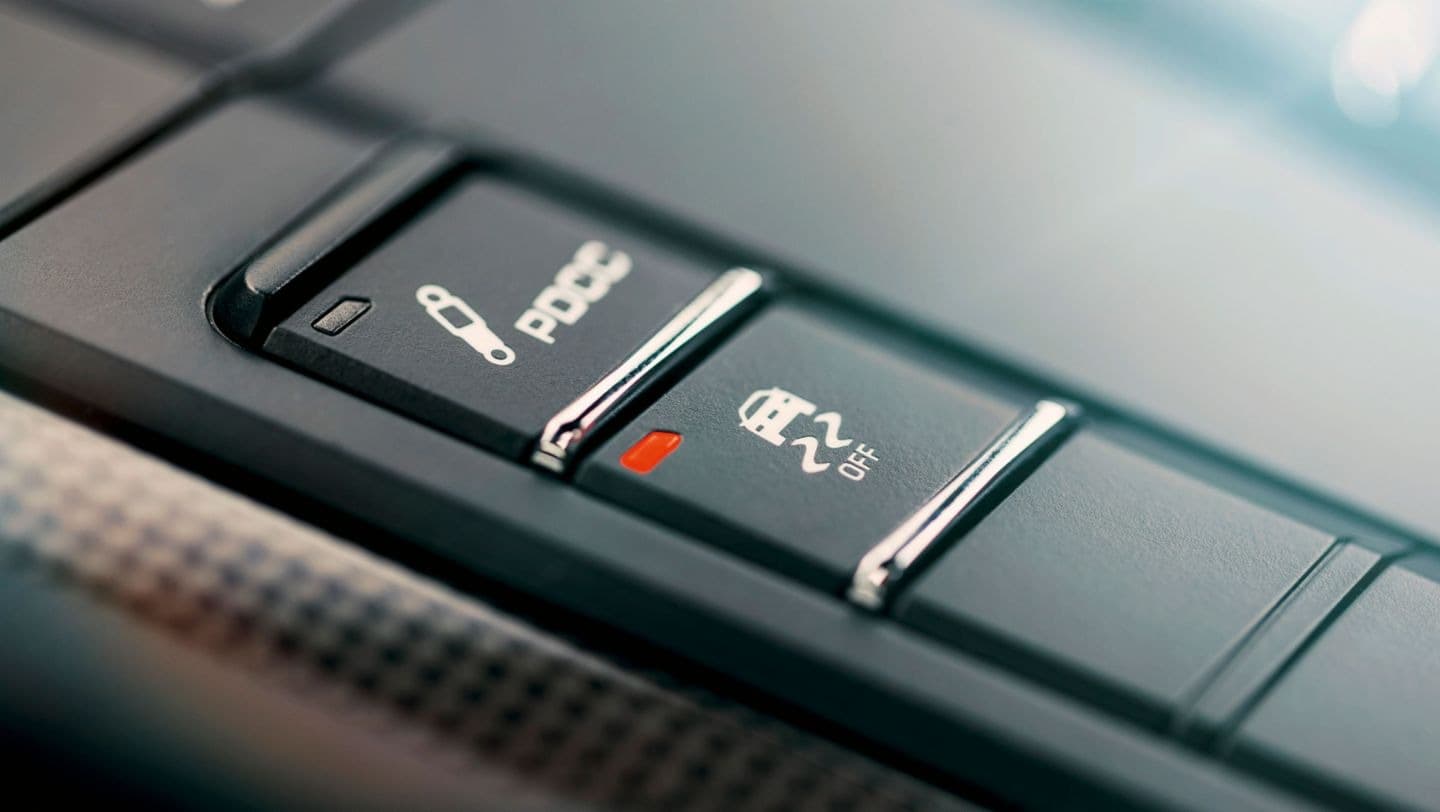
From steep residential hills to fog-dampened pavement and constantly changing elevation, Bay Area driving presents a unique blend of challenges. Porsche engineering helps mitigate that unpredictability through two core technologies: Porsche Stability Management (PSM) and Porsche Traction Management (PTM). Working individually and in unison, these systems support balance, traction, and control across the varied conditions Northern California drivers experience every day.
Advanced Porsche Tech for Bay Area Roads
Porsche's two core technologies, Porsche Stability Management and Porsche Traction Management, address conditions in which the weather, terrain, and road patterns may bring sudden and unwelcome challenges. Bay Area drivers have learned that fog comes in around Oakland, slick, wet mornings are common near Walnut Creek, and windy, cross-canyon sections are often encountered while approaching Dublin. Luckily, an array of Porsche tech systems integrate with wheel velocity, steering input, torque demand, and road traction, giving drivers more confidence during transitions.
Together, the systems help the vehicle remain composed as it navigates dry pavement, moisture, elevation changes, and tight curves. These scenarios are frequent occurrences throughout the Bay Area's highways, suburban neighborhoods, and hillside roads.
What Porsche Stability Management Does
Porsche Stability Management is the vehicle's electronic stability control system. Its core purpose is to maintain stability and traction. Front–rear torque distribution is handled by Porsche Traction Management (PTM) on AWD models. Stability control systems, including PSM, also modulate engine torque and work with systems such as ABS, traction control, differential locks, and torque vectoring. PSM constantly evaluates:
Wheel-slip levels
Steering input
Lateral and longitudinal acceleration
Vehicle rotation (yaw)
When loss of control is detected or anticipated, PSM intervenes by:
Braking individual wheels to counter understeer or oversteer
Reducing engine power when needed
Assisting with stability during abrupt stops
Helping maintain direction on slippery or uneven surfaces
These adjustments occur in milliseconds. PSM isn't tuned for specific locations, but its capabilities align naturally with the region's diverse driving conditions, such as:
Yaw control: Settles the vehicle when cornering through the tighter hillside turns between Dublin and Danville
Brake intervention: Supports stability in sudden stop-and-go traffic around Fremont or San Jose
Power reduction: Maintains composure while climbing Livermore's steep residential grades
Slip management: Helps keep traction on fog-dampened pavement in Oakland or coastal areas
How Porsche Traction Management Improves Grip
Porsche Traction Management is Porsche's state-of-the-art all-wheel drive system, present on Porsche models with AWD (911 Carrera 4, Macan, Cayenne, etc.). The system actively and rapidly distributes drive torque between front and rear axles. The PTM system is responsible for improving dynamic stability and traction through the use of distributed torque:
Distributing drive torque between front and rear axles in an active and dynamic manner
Maximizing available traction of each drive wheel during acceleration
Increasing traction available during acceleration in low-traction conditions
Increasing grip to allow for stable vehicle handling in poor, slippery, and uncertain surface conditions
Sensors detect the speed of each wheel, the steering angle, and the vehicle dynamics to provide the most advantageous torque distribution. Torque is normally rear-biased, with the system able to vary distribution continuously between the permanently driven rear axle and the front axle based on grip. PTM helps Bay Area drivers in the following ways:
Confident acceleration on damp residential streets or wet freeway entrances
Stable climbing performance on steep suburban hills
Better grip through tight, twisting neighborhood roads across Danville or Pleasanton
Smooth power delivery even when traction varies between patches of pavement
PTM allows the vehicle to make the most of available grip, which is especially valuable in climates that shift quickly, such as Northern California.
How PSM and PTM Work Together
Porsche Stability Management (PSM) and Porsche Traction Management (PTM) systems work together effectively to assist with balance, grip, and direction. While Porsche PSM controls the vehicle's yaw and limits rotation, Porsche PTM manages torque between the front and rear axles, while PSM and related brake-based systems help individual wheels maintain grip. The two systems align to maintain vehicle stability as surface conditions change during driving. The added value of the integrated systems is most apparent on the windy hills from Livermore to Danville, where surface conditions and elevation change quickly.
PSM helps keep the car on the line through a curve by selectively braking and, if needed, reducing engine power, while PTM manages how much of that power reaches the front vs. rear axle. While you drive in Oakland, Fremont, and Pleasanton, you'll notice that driving feels like a cohesive experience, blending steering, acceleration smoothness, and balance in diverse situations.
The effects of having PSM and PTM working together are noticeable in terms of the convenience of daily driving and the high-performance driving experience. Both systems boost the driver's confidence in the capability of the vehicle to control traction, braking, torque, and direction as conditions change.
Benefits for Everyday Driving and Performance
Porsche Stability Management and Porsche Traction Management collaborate to create a seamless driving experience by balancing steering response, acceleration, traction, and braking as driving conditions evolve. With both systems active, the vehicle maintains confidence-inspiring control, whether navigating winding hillside curves, wet pavement, or heavy traffic.
Livermore residents are able to maintain a steady grip when traveling downhill on steep grades in their neighborhoods. Residents of San Jose enjoy steady grip levels during stop-and-go traffic. In Oakland and Walnut Creek, where moisture or fog may inhibit tire grip, PSM and PTM provide controlled acceleration and stable cornering, regardless of grip level.
Whether you're commuting or driving with a bit more passion, Porsche integrates stability and traction systems that provide the car with responsiveness to direct it quickly and to manage the power smoothly. The result improves control, comfort, and confidence in a host of Bay Area circumstances.
Explore Porsche Safety Technology at Porsche Livermore
Porsche Stability and Traction Management illustrates how engineering can impact an overall driving experience. Drivers interested in learning more about Porsche's safety technology and features can visit our Porsche Livermore team. Call us at 925-344-5488 or complete our secure online form to get started. We're here to answer your questions, schedule your test drives, and review financing options to get you into a Porsche today.