


2026 Porsche Taycan vs 2026 Tesla Model 3 Performance
Compare the 2026 Porsche Taycan vs 2026 Tesla Model 3 Performance on speed, handling, range, and value. Find out which electric car truly wins the battle.
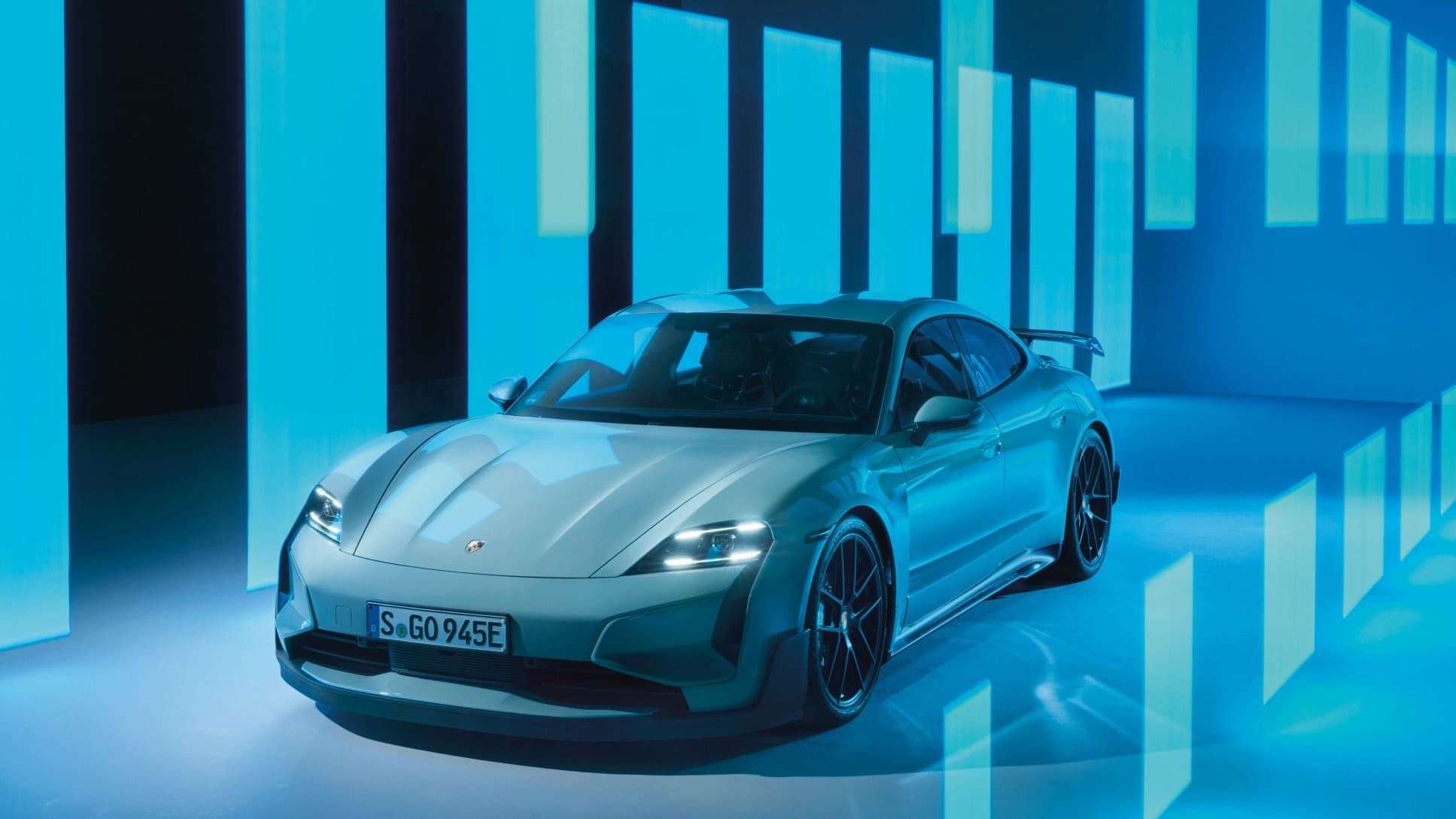
Both the 2026 Porsche Taycan and the 2026 Tesla Model 3 Performance sit near the top of their respective categories. They're fast, they're electric, and they're built for drivers who want more than a basic commute. But if you're genuinely weighing these two against each other, you've probably already sensed that they represent very different ideas about what driving should feel like. One is a sports car that happens to run on electricity. The other is a technology platform that happens to go very fast.
At Porsche Livermore, we work with buyers making exactly this comparison, and we think an honest analysis beats a sales pitch every time.
Two Kinds of Performance: What the Numbers Miss
Acceleration figures make for great headlines, but they don't tell the full story. Both cars deliver serious straight-line performance. The real question isn't which one launches harder off the line; it's what happens between the corners, through a sweeping on-ramp, or on a winding stretch of road north of the Livermore Valley.
The Taycan's performance philosophy is inherited directly from Porsche's motorsport DNA. Every aspect of how it accelerates, brakes, and changes direction reflects decades of building sports cars that communicate with their drivers. The Model 3 Performance prioritizes raw output and efficiency in a package engineered for broad appeal. That's not a weakness, but it does define a fundamentally different driving experience, one that's exhilarating in a straight line but less nuanced when the road gets interesting.
If you'd like to see what's currently available, view our new Taycan inventory and find the configuration that fits your driving life.
Driving Character: Engineered Emotion vs. Raw Acceleration
Porsche has always believed a great driver's car should feel alive. The Taycan carries that belief into the electric era without compromise. There's a deliberate conversation happening between the driver, the steering wheel, the pedals, and the road, a quality that makes every drive feel intentional rather than automated.
The Model 3 Performance delivers its thrills differently. Immediate torque is the headline act, and its 2.9-second 0-60 time never fails to impress. For drivers who measure excitement in seconds and g-forces, that's genuinely satisfying. The overall driving character stays relatively neutral, though, designed to be accessible rather than expressive.
Steering, Handling, and the Feel Behind the Wheel
The Taycan's steering is precise, well-weighted, and honest about what the front tires are doing. Available rear-axle steering tightens the turning radius at low speeds and improves high-speed stability when pushing through corners, and it comes standard on the Turbo S. Its low center of gravity contributes to a planted, confident feel across all trims, and steering weight builds naturally with cornering forces. For a four-door EV, it handles with a purity that genuinely surprises first-time drivers.
The Model 3 Performance offers competent, composed handling that suits its everyday character well. It corners cleanly and stays stable under hard acceleration, but the steering feel is lighter and less communicative than the Taycan's. Capable, just not the kind of setup that invites you to explore what the car can actually do.
Ride Quality Through Bay Area Roads and Commutes
Anyone who drives regularly through the Bay Area knows the roads can be unforgiving. The key distinction here: adaptive air suspension comes standard across the full 2026 Taycan lineup, giving Porsche engineers the ability to deliver both canyon-road composure and daily-commute compliance in the same car. The result feels purposeful rather than harsh, and it adjusts to road conditions in ways a fixed-rate setup simply can't match.
The Model 3 Performance uses a more direct, road-communicating suspension setup. It handles commuter conditions with ease and delivers a slightly more forgiving ride in stop-and-go traffic. Neither approach is wrong. They serve different driver types, and knowing which one suits you is part of choosing the right car.
Interior Quality and Everyday Refinement
Step inside both cars and the philosophical difference becomes immediately clear. Tesla keeps things radically simple: a 15.4-inch touchscreen dominates the interior, physical controls are nearly absent, and the cabin aesthetic is clean to the point of minimalism. It's a deliberate design statement that many drivers genuinely love.
The Taycan takes a completely different approach. Porsche built its cockpit around the idea that a driver's environment should feel as refined as the machine itself.
Cabin Materials, Craftsmanship, and Comfort
The Taycan's interior is one of the strongest arguments for its price point. The curved 16.8-inch instrument cluster offers four selectable display modes (Classic, Map, Full Map, and Pure) so drivers can configure what they see based on how they're driving. Race-Tex upholstery, a high-quality microfibre option partially made from recycled polyester fibers, is available for those who want a performance-forward cabin without traditional leather. Panel fit, soft-touch surfaces, and acoustic refinement create an environment that competes with dedicated luxury sedans at the same price.
The Model 3 Performance has improved meaningfully over earlier generations and comes standard with an 8-speaker audio system, with the interior overall reflecting a functional rather than luxurious approach, including hard plastics in areas where the Taycan uses premium materials.
Technology Experience: Taycan's Cockpit vs. Tesla's Minimalism
The Taycan's multi-display cockpit puts critical information exactly where a driver needs it. Porsche Voice Pilot, accessed through Porsche Connect with the "Hey Porsche" command, handles navigation, phone, and media without requiring the driver to look away from the road. The instrument cluster's four display modes let drivers prioritize what matters most in a given situation.
Tesla's single-screen approach works well for many functions, but climate control, mirror adjustments, and drive mode changes all live inside the touchscreen, requiring menu navigation for tasks the Taycan handles with dedicated controls. For tech-forward drivers who've adapted to this workflow, it's fine. For drivers who prefer eyes-on-road interaction, the Taycan's setup feels more considered.
One honest trade-off worth noting: the Model 3 Performance doesn't support Apple CarPlay or Android Auto, and neither does the Taycan. The difference is that the Taycan's cockpit layout compensates with a more driver-focused interface overall.
Long-Trip Confidence: Range, Charging, and Peace of Mind
Range: What the Numbers Mean on Real Routes
Range and charging infrastructure are practical concerns no EV buyer should overlook. The 2026 Taycan delivers EPA-estimated range of 252 to 318 miles depending on trim and battery configuration, with the base RWD model equipped with the Performance Battery Plus reaching the top of that range. Independent testing by outlets including Edmunds and InsideEVs consistently shows real-world range may exceed EPA estimates by 10 to 15 percent in mixed driving, yielding approximately 277 to 366 miles depending on trim. The Model 3 Performance is EPA-rated at 309 miles.
For Bay Area drivers, a run from Livermore to Monterey and back sits comfortably within the Taycan's real-world range without a charging stop. Where the network difference becomes relevant is on longer travel days when charging stop frequency actually matters. We encourage buyers to map their most common long-distance routes against both networks before deciding.
Charging Speed and Network Access
On charging speed, the Taycan's 800V architecture supports up to 320 kW peak DC charging, reaching 10 to 80 percent in approximately 18 minutes at a compatible station. Our primary public charging partnership is with the Electrify America network. For home charging, a full charge via Level 2 (240V) takes roughly 9 to 10 hours overnight.
Tesla Supercharger access is not fully supported for the Taycan at the time of writing. Porsche is actively working on access and an announcement is forthcoming. A third-party NACS adapter exists but is not officially recommended. The Model 3 Performance, by contrast, has native access to Tesla's Supercharger network with V3 speeds up to 250 kW. That's a genuine advantage in charging convenience, and we won't minimize it.
Contact us if you have questions about charging infrastructure in your area. We're happy to walk through real-world scenarios that match how you actually drive.
Performance Value: Understanding the Price Difference
The Taycan carries a significant price premium over the Model 3 Performance, and that gap deserves an honest conversation.
The Model 3 Performance offers exceptional value: fast, comfortable, well-equipped, and backed by Tesla's software ecosystem. For buyers entering the performance EV space, it's a genuinely strong choice.
The Taycan's higher price reflects its position as a luxury sports car. The Taycan GTS, for example, produces 690 HP with Overboost in Launch Control and represents a trim that balances serious capability with a more attainable position within the lineup. Across all trims, the build quality, driving dynamics, interior refinement, and depth of engineering collectively justify the premium for the right buyer.
On depreciation, the data is worth knowing. The Taycan loses approximately 59.1 percent of its value over five years, while the Model 3 Performance loses approximately 57 percent. The difference is modest, about 2.1 percentage points, and we won't overstate it as a financial argument. The Taycan's ownership case rests on the driving and ownership experience, not on resale math.
The Verdict: Which EV Is Right for You?
The Model 3 Performance is a genuinely capable car that delivers exceptional performance for its price. For buyers who want a technology-forward EV with strong range, native Supercharger access, and a lower entry point, it earns its reputation.
The Taycan is for the driver who wants refinement alongside capability, where the feel of the drive, the quality of the cabin, and the engineering depth matter as much as the 0-60 number. If you want your EV to feel like a Porsche, it's because that's exactly what it is.
Experience the 2026 Taycan at Porsche Livermore
Reading about the difference between these two cars only gets you so far. The real answer comes the moment you sit in a Taycan, grip the steering wheel, and take it onto a road you know well.
We're proud to be recognized as a CARFAX Top-Rated Dealer, a reflection of our commitment to transparency and the ownership experience we aim to deliver from the first conversation through every service visit. Our team knows the Taycan lineup in detail and can walk you through every configuration without pressure.
Schedule a test drive at Porsche Livermore and experience firsthand what separates the 2026 Taycan from everything else on the road.